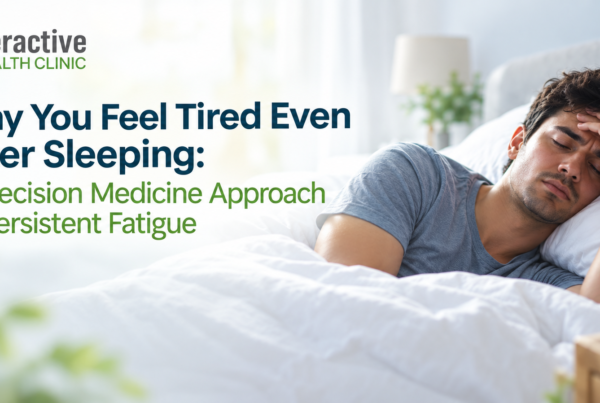
Busy professionals in Lynnwood are under more pressure than ever before. Long workdays, endless emails and notifications, demanding schedules, family responsibilities, and the expectation to always be “on” can take a significant toll on both physical and mental health. What often begins as occasional stress can gradually evolve into chronic fatigue, brain fog, poor sleep, reduced productivity, mood changes, and a constant feeling of running on empty. For many professionals, a weekend of rest or an extra cup of coffee is no longer enough to restore their energy or help them feel like themselves again.
What is changing is not just the amount of stress people are experiencing, but how they are choosing to address it. More Lynnwood professionals are moving beyond temporary solutions and looking for answers that explain why they feel depleted in the first place. Rather than masking symptoms, they want to understand what is happening beneath the surface and identify the factors contributing to their stress, fatigue, and burnout. This growing demand for personalized care is one of the reasons precision medicine is gaining so much attention.
At Interactive Health Clinic, we frequently meet patients who are frustrated by feeling exhausted, overwhelmed, or mentally drained despite doing everything they believe they should be doing. Precision medicine offers a different approach. Instead of assuming stress affects everyone the same way, it evaluates the unique biological factors that may be influencing each individual, including hormone balance, sleep quality, nutrient status, inflammation levels, metabolic health, and other underlying contributors. By looking at the whole person rather than a single symptom, we can develop personalized strategies that help patients improve resilience, restore energy, and regain a greater sense of control over their health and well-being.
Why Stress Feels Different Today Than It Did in the Past
One of the most common things we hear from patients at Interactive Health Clinic is, “I’m functioning, but I don’t feel like myself anymore.” They’re still showing up to work, managing responsibilities, and checking off their daily tasks, but it takes far more effort than it used to. By the end of the day, they feel completely drained. Sleep no longer feels restorative, energy levels remain low, focus becomes inconsistent, and even simple decisions can feel mentally exhausting.
What many people don’t realize is that this goes far beyond simply being tired. When the body is exposed to chronic stress for months or years, it can begin affecting multiple systems throughout the body. Over time, stress may influence hormone balance, inflammation levels, sleep quality, metabolic health, and even the body’s ability to recover and repair itself. This is often why people feel increasingly fatigued, overwhelmed, and disconnected from the energy and resilience they once had.
A major player in this process is cortisol, the body’s primary stress hormone. Under normal circumstances, cortisol follows a predictable daily rhythm. Levels should rise in the morning to help you wake up and feel alert, then gradually decline throughout the day so your body can relax and prepare for sleep. However, when stress becomes constant, whether from work pressures, family responsibilities, poor sleep, or ongoing life demands, that rhythm can become disrupted.
For some individuals, cortisol remains elevated for too long, leaving them feeling wired, anxious, and unable to fully relax. Others may experience the opposite effect, where cortisol production becomes dysregulated and energy levels begin to crash. In both situations, symptoms can include fatigue, brain fog, irritability, poor sleep, decreased motivation, slower recovery, and difficulty handling everyday stressors that once felt manageable.
This is where precision medicine with holistic care offers a different perspective. Rather than simply labeling these symptoms as “stress” and moving on, we look deeper to understand what may be contributing to them. At Interactive Health Clinic, we evaluate the underlying factors that may be affecting your body’s stress response, including hormone imbalances, nutrient deficiencies, inflammation, sleep disturbances, metabolic health, and other individual factors. Understanding what is truly driving these symptoms allows us to create a more personalized strategy focused on restoring balance, improving resilience, and helping you feel like yourself again.
Moving Beyond Symptom Management
For many professionals, stress management often becomes a cycle of reacting to symptoms as they appear. If sleep becomes a problem, they look for something to help them fall asleep. If energy levels drop, they rely on caffeine or other stimulants to get through the day. If anxiety or overwhelm becomes difficult to manage, they seek ways to quiet the symptoms. While these approaches can provide temporary relief and certainly have an important place in healthcare, they often do not address why the body became imbalanced in the first place.
At Interactive Health Clinic, our precision medicine approach focuses on understanding the underlying factors contributing to stress rather than simply managing its effects. Instead of looking at symptoms in isolation, we evaluate how multiple systems throughout the body may be interacting and influencing overall health. Chronic stress can affect hormone balance, blood sugar regulation, nutrient absorption, inflammation levels, sleep quality, digestive health, and cellular energy production. When one or more of these systems becomes disrupted, the effects can be felt throughout the entire body.
This is why stress can look very different from one person to the next. One professional may struggle with fatigue, brain fog, and low motivation, while another experiences anxiety, sleep disturbances, and difficulty concentrating. Both individuals may be dealing with chronic stress, yet the biological factors driving their symptoms can be entirely different.
Precision medicine recognizes that no two patients are exactly alike. By identifying the unique contributors behind each individual’s symptoms, we can create a more personalized strategy designed to support recovery, improve resilience, and help patients regain a greater sense of energy, focus, and overall well-being. Rather than simply helping someone cope with stress, the goal is to understand what is creating it within the body and address those factors directly.
Why Lynnwood Professionals Are Particularly Affected
Lynnwood is home to a growing community of professionals who spend their days navigating demanding careers, managing teams, serving patients, supporting students, running businesses, or balancing remote work with personal responsibilities. While these careers can be rewarding, they often require sustained mental focus, constant decision-making, and the ability to perform under pressure day after day. For many people, there is little time left for meaningful recovery once the workday ends.
The challenge is that chronic stress rarely appears overnight. More often, it builds gradually over months or even years. At Interactive Health Clinic, we frequently see professionals who initially dismiss symptoms as part of a busy lifestyle. They may notice they are relying more heavily on caffeine to stay productive, struggling to stay motivated, becoming more irritable than usual, or feeling mentally drained by tasks that once felt routine. Many describe feeling like they are operating at only a fraction of their normal capacity yet cannot pinpoint exactly why.
What makes these symptoms especially frustrating is that they often develop beneath the surface long before they become severe enough to disrupt daily life. Hormonal changes, poor sleep quality, chronic inflammation, nutrient deficiencies, and ongoing nervous system stress can all contribute to a gradual decline in energy, focus, and resilience. Because these changes happen slowly, many professionals simply adapt to feeling less than their best and assume it is a normal part of getting older or having a demanding career.
This is one of the reasons precision medicine resonates so strongly with Lynnwood professionals. It takes a personalized, data-driven approach that focuses on identifying the underlying factors affecting performance, energy, and well-being. Rather than simply managing symptoms, precision medicine seeks to uncover why those symptoms are occurring in the first place. For professionals who value understanding problems, analyzing information, and finding effective solutions, this approach often feels both logical and empowering.
What Precision Medicine Actually Looks Like in Practice
One of the reasons precision medicine is gaining attention among Lynnwood professionals is that it moves beyond assumptions and focuses on understanding what is actually happening inside the body. Many patients arrive at Interactive Health Clinic knowing something feels off, but they are not sure why. They may be experiencing fatigue, poor sleep, difficulty concentrating, mood changes, or persistent stress, yet standard explanations often fail to provide clear answers.
A precision medicine approach begins with gathering a more complete picture of an individual’s health. Depending on a patient’s symptoms and goals, this may include evaluating hormone levels, thyroid function, blood sugar regulation, nutrient status, inflammation markers, sleep quality, and other factors that influence energy, resilience, and overall well-being. The goal is not simply to collect data, but to uncover patterns that may be contributing to chronic stress and burnout.
What makes this approach different is that no single test result is viewed in isolation. At Interactive Health Clinic, we look at how multiple systems are working together and how imbalances in one area may be affecting another. For example, disrupted sleep combined with nutrient deficiencies and hormone imbalances may create a very different picture than stress alone. When these pieces are evaluated together, patients often gain a much clearer understanding of why they have been struggling and what can be done to improve their health.
From there, treatment becomes highly personalized. Depending on the individual, recommendations may include nutritional strategies, targeted supplementation, hormone optimization, IV nutrient therapy, sleep support, lifestyle modifications, and other therapies designed to address specific underlying contributors. The goal is not to overwhelm patients with information, but to provide practical solutions that fit into real life and create meaningful, sustainable improvements.
The Role of Recovery in High-Performance Living
One of the most overlooked aspects of health among busy professionals is recovery. Many people spend years focusing on productivity, performance, and meeting responsibilities, while assuming recovery will happen naturally when they eventually slow down. Unfortunately, the body does not always work that way.
When the nervous system remains in a constant state of stress, the body may struggle to fully shift into recovery mode. Over time, this can affect sleep quality, digestion, hormone balance, mental clarity, immune function, and emotional resilience. Even highly motivated individuals can begin to feel like they are working harder while accomplishing less.
At Interactive Health Clinic, we often help patients understand that recovery is not a luxury, it is a biological necessity. Precision medicine allows us to identify factors that may be interfering with the body’s ability to repair, restore, and recharge. In many cases, small but targeted adjustments can create significant improvements in how a person feels and functions.
This may include improving sleep quality, supporting nervous system regulation, optimizing hormone balance, addressing nutrient deficiencies, or helping patients establish daily habits that better support the body’s natural rhythms. When recovery improves, patients often notice benefits that extend far beyond stress management, including better energy, improved focus, enhanced productivity, and greater overall well-being.
Why Personalization Matters More Than Ever
One of the most important lessons patients learn is that stress does not affect everyone the same way. Two people may both describe themselves as stressed, yet their symptoms can be completely different.
One person may feel anxious, restless, and unable to sleep, while another feels exhausted, unmotivated, and struggles to get through the day. Some experience digestive issues, while others notice changes in mood, weight, focus, or recovery. Although stress may be a common factor, the underlying biological drivers are often very different.
This is why personalization sits at the heart of precision medicine. Rather than treating stress as a single condition with a single solution, we view it as valuable information about what may be happening within the body. By identifying the specific factors contributing to each patient’s symptoms, we can create more targeted and effective strategies for improvement.
At Interactive Health Clinic, this personalized approach helps patients move beyond trial and error and toward solutions that are based on their unique physiology, health history, and goals.
From Surviving to Thriving Again
For many Lynnwood professionals, the goal is not simply to survive another workweek. They want to wake up feeling refreshed, think clearly throughout the day, maintain steady energy, and handle life’s challenges without feeling completely depleted.
This is one of the biggest shifts we are seeing in healthcare today. People are no longer satisfied with simply coping with symptoms. They want answers, they want to understand their bodies better, and they want strategies that help them perform at their best both professionally and personally.
At Interactive Health Clinic, we work with patients who are ready to move beyond temporary fixes and take a more proactive approach to their health. By identifying and addressing the underlying contributors to stress, fatigue, and burnout, we help patients build a stronger foundation for long-term wellness and resilience.
Take Control of Stress Before It Takes Control of You
Stress may be common, but feeling exhausted, overwhelmed, and disconnected from your best self should not be accepted as normal. When stress begins affecting your sleep, energy, focus, mood, and overall quality of life, it is often a sign that your body needs more support than simply pushing through another day.
Precision medicine offers a more personalized path forward. Instead of treating stress as a vague label, it helps uncover the specific factors contributing to how you feel and creates a strategy designed around your unique needs.
If you are struggling with chronic stress, burnout, fatigue, brain fog, or poor recovery, the team at Interactive Health Clinic is here to help. Schedule a consultation today to learn how our precision medicine and holistic care approach can help you restore balance, improve resilience, and get back to feeling like yourself again.
Call us at (425) 361-7945 or visit www.InteractiveHealthClinic.com to learn more.